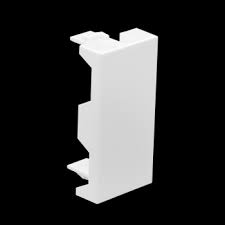
An **Information Socket RJ45** is a standardized interface used primarily for networking and telecommunications. The RJ45 socket, which stands for “Registered Jack 45,” is a crucial component for Ethernet networks and is commonly found in homes, offices, and data centers. It facilitates the connection of various devices, such as computers, switches, routers, and other networking equipment, through Ethernet cables that utilize twisted pair wiring.
### Key Features of an Information Socket RJ45:
1. **Physical Design**:
– **Shape and Size**: The RJ45 socket has a rectangular shape and features 8 small metal pins inside, which align with the 8 conductors of the Ethernet cable. The socket is designed to receive the RJ45 connectors (also called plugs), which connect the cables to networking devices.
– **Material**: The socket is typically made from durable plastic (such as ABS) and has metal contacts, which are usually made of gold or nickel to ensure reliable, corrosion-resistant connections.
2. **Electrical Contacts**:
– The 8 pins inside the RJ45 socket correspond to the 8 individual wires inside an Ethernet cable (Category 5e, 6, or 6a). Each pin ensures a specific function such as data transmission (sending and receiving signals), and some may be reserved for additional functions like power over Ethernet (PoE).
– **Pinout**: The wiring can follow different standards, with T568A and T568B being the most commonly used configurations. These define the order in which the wires are arranged in the cable to ensure proper data transmission.
3. **Compatibility**:
– RJ45 sockets are primarily used for networking, supporting standards like **Fast Ethernet** (100BASE-T), **Gigabit Ethernet** (1000BASE-T), and even **10 Gigabit Ethernet** (10GBASE-T) over twisted pair cabling.
– The socket also supports other networking protocols and services like **Voice over IP (VoIP)**, **Power over Ethernet (PoE)**, and even **Internet of Things (IoT)** devices, provided the wiring and the equipment are compatible.
4. **Installation and Use**:
– Information sockets are typically mounted into **wall plates** or **patch panels**, making them easy to install and replace in network setups. They may also be found in modular jacks and faceplates for installation in a variety of environments.
– These sockets are compatible with standard **Ethernet cables**, specifically those with RJ45 connectors. Cables can be straight-through (used for connecting different devices like computers to routers) or crossover (used for connecting like devices, such as two computers directly).
5. **Data Transmission**:
– An RJ45 socket is responsible for facilitating high-speed data transmission by allowing for the connection of different devices in an Ethernet network. These devices communicate by sending data packets over the network.
– The performance of the socket is highly dependent on the quality of the cables used, the installation of the cables (i.e., avoiding excessive bends or poor terminations), and the overall integrity of the network.
6. **Applications**:
– **Home and Office Networking**: Commonly used in residential or corporate environments to connect computers, routers, and other networking devices.
– **Data Centers**: In more complex environments, such as data centers, RJ45 sockets are used in high-density applications, connecting servers, switches, and patch panels to ensure smooth communication.
– **Telecommunications**: Used in systems requiring high-speed data transmission, such as VOIP phone systems and other communication infrastructure.
7. **Variants**:
– **Shielded vs. Unshielded**: There are two primary types of RJ45 sockets — **Shielded (STP)** and **Unshielded (UTP)**. Shielded RJ45 sockets are designed to reduce electromagnetic interference (EMI) and are often used in industrial environments. Unshielded sockets are more common in everyday office or home networking setups.
– **Locking Mechanism**: Some models of RJ45 sockets come with additional locking mechanisms to prevent accidental disconnections, ensuring a more secure connection.
8. **Environmental Considerations**:
– RJ45 sockets are designed to withstand environmental factors such as temperature fluctuations, dust, and moisture. However, the installation location and environment should still be considered to prevent damage or degradation of performance over time.
### Conclusion:
An **Information Socket RJ45** plays a fundamental role in networking, offering a reliable, standardized interface for Ethernet connections. Whether it is for a small home network or large-scale enterprise systems, it ensures smooth data transmission and connectivity between devices. The socket’s design, installation ease, and compatibility with various Ethernet standards make it a go-to choice for modern networking solutions.
Electricals Colours
BLACK, WHITE
Reviews
There are no reviews yet.
Be the first to review “INFORMATION SOCKET RJ45 ALLZY LEGRAND” Cancel reply
Returns of Products are accepted from Buyers under the following conditions:
If the size or the dimensions of the ordered Product is not as specified in the purchase order and is beyond tolerance limit (as per industry standard).
If incorrect Products are delivered.
If a packed Product delivered is found tampered with.
If it is found that received Products are defective or malfunctioning.
If quality of the received Product does not match with the specifications stated in a purchase order
Subject to the above, a Buyer may request for a replacement Product. In case the Seller does not have a replacement Product, the Seller can agree to a refund to the Buyer and the Buyer shall be obligated to accept the refund in place of a replacement.
A replacement request should be raised by a Buyer within 24 (twenty-four) hours of delivery, and a replacement will be done within 10-15 days time from raising of the replacement request by the Buyer , and solely depends upon the availability of the Products at the suppliers end.




Reviews
There are no reviews yet.